
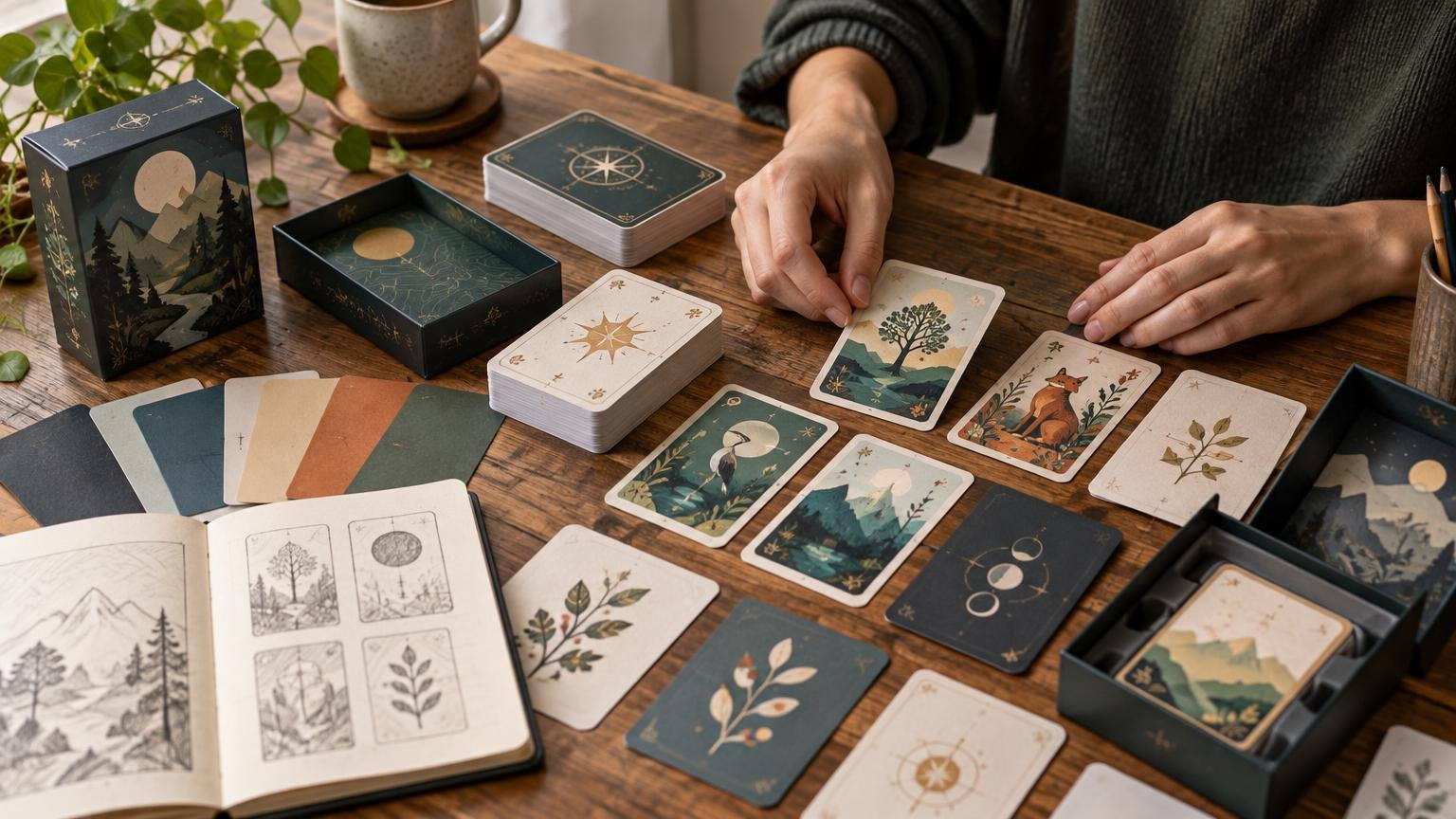
Custom Playing Cards: Design, Printing and Packaging
Practical guidance for designers, artists, educators, and publishers choosing card sizes, print files, stocks, finishes, prototypes, and packaging.
Custom Playing Cards: Design, Printing and Packaging
A custom deck succeeds when its artwork, dimensions, materials and packaging work together. Create Playing Cards helps game designers, artists, educators, event organizers and small publishers make production decisions that support comfortable handling, clear reading and reliable printing. The aim is practical: turn a promising card idea into a coherent physical object.
Here you can explore the choices that shape a deck from the first layout through the packed result. Coverage connects card size with information space, stock with stiffness and opacity, finish with glare and feel, and box structure with the complete contents. File preparation and prototyping guidance helps catch expensive mismatches before larger quantities are considered.
Find the Right Starting Point
Start with the decision currently blocking progress. If the deck feels crowded or awkward in hand, begin with Card Sizes & Formats. If it bends, shows through or reflects too much light, visit Card Stock & Finishes. For clipped borders, soft images or uncertain typography, Deck Design & Files provides the most relevant route.
Choose Game Prototyping when rules or components still need revision. Move to Boxes & Packaging after estimating the thickness of cards, instructions, tokens and inserts together. Specialty Card Projects is the place for formats whose use changes the usual priorities, including image-led, instructional, commemorative and divination decks. Exact specifications should always be checked against the current printer template before files are finalized.
Latest Custom Card Guides
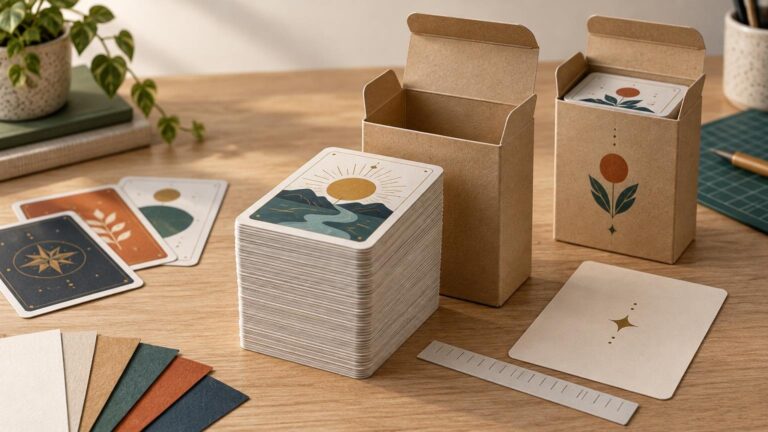
How Card Thickness Changes the Box Depth You Need
A tuck box should be sized from the measured thickness of the complete packed deck—not card count or stock weight alone. Use this workflow to estimate the required internal depth…
Read more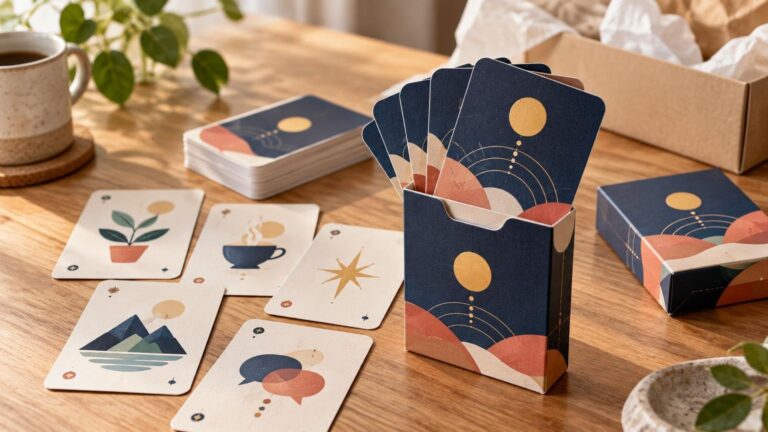
Customer appreciation gifts with a logo — Custom Cards and Branded Project Ideas
A custom card deck can turn a routine logo gift into something playable, useful or collectible. Explore practical project ideas, branding choices and production steps.
Read more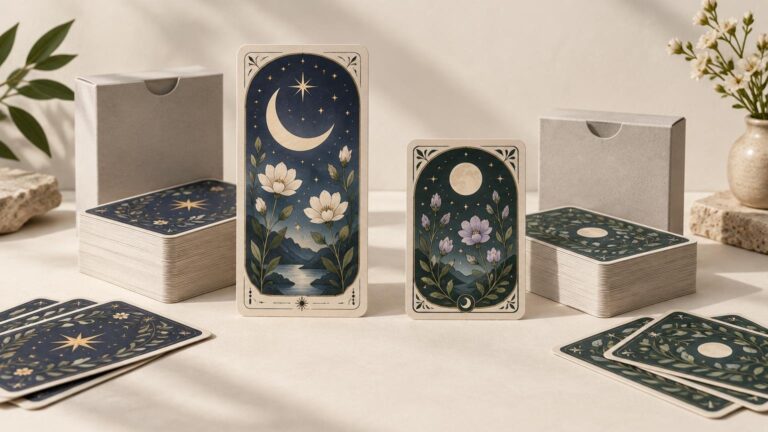
Tarot Size vs Poker Size Cards for Custom Illustrated Decks
Tarot cards provide a taller canvas for expressive artwork and supporting text, while poker cards are more compact in the hand, on the table and in a package. Here is…
Read more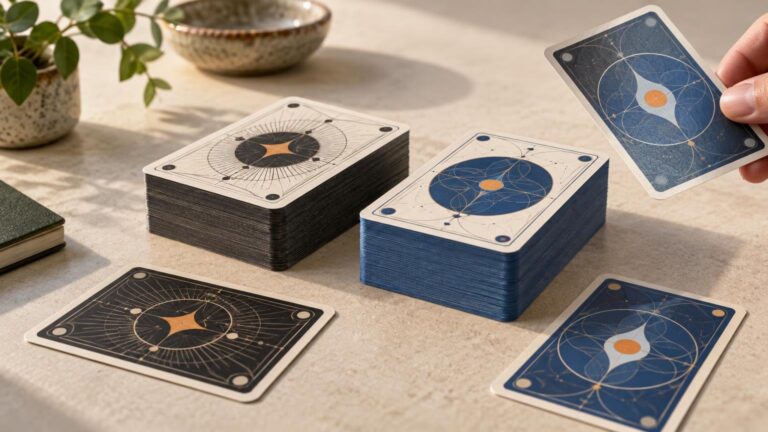
Black-Core vs Blue-Core Playing Card Stock
Black core and blue core describe an internal opacity layer, not the complete quality or handling of a playing card. Compare finished samples for show-through, stiffness, finish, durability and deck…
Read more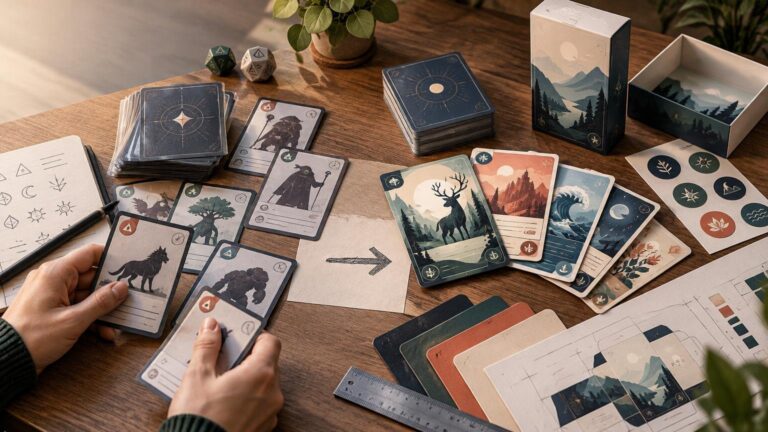
PrintMTG vs MakePlayingCards: Why the MTG Workflow Wins
PrintMTG offers the more direct workflow for MTG playtest decks and custom Magic-style cards, while MakePlayingCards is better suited to original games and elaborate deck production.
Read more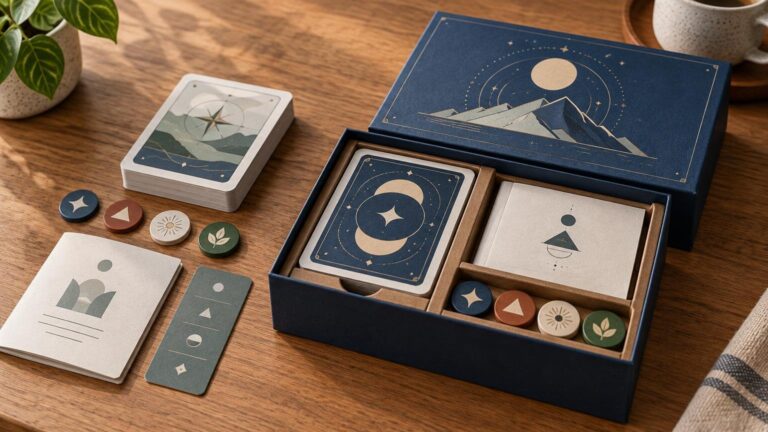
How to Plan Packaging for a Deck With Extra Rules or Tokens
Plan the box around the complete packed product—not the card count alone. This workflow covers deck thickness, rules, tokens, inserts, presentation, prototypes, and shipping.
Read more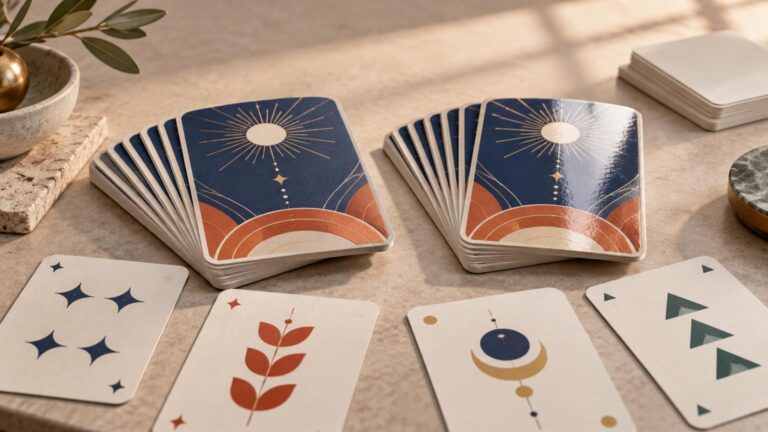
Matte vs Gloss Finish for Custom Playing Cards
Matte and gloss primarily change how a card reflects light. Learn how to choose a finish while separately evaluating stock, opacity, stiffness, texture and handling.
Read more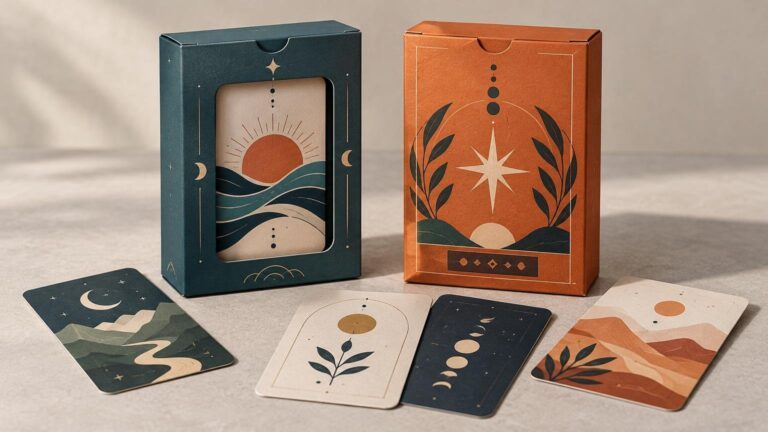
Window Box vs Closed Tuck Box for Retail Card Decks
Choose a windowed tuck box when seeing an actual card helps sell the deck. Choose a closed tuck box when branding and retail information need the full printed surface.
Read moreMake the Whole Deck Work
Card production is a chain of connected decisions. A narrower format may improve a large hand but reduce room for text. A premium finish may look polished while changing glare or handling. Extra rules, tokens or dividers may require a different box. Useful guidance should make those consequences visible before one choice forces another.
The best next step is usually concrete: confirm a template, print a rough sheet, sleeve temporary cards, measure the complete stack or assemble a plain packaging mockup. Small checks reveal whether the deck works at real scale. Once the structure is sound, artwork, finish and presentation can support it rather than conceal unresolved problems.